




What Are The Main Components Of An Aircraft’s Cockpit?
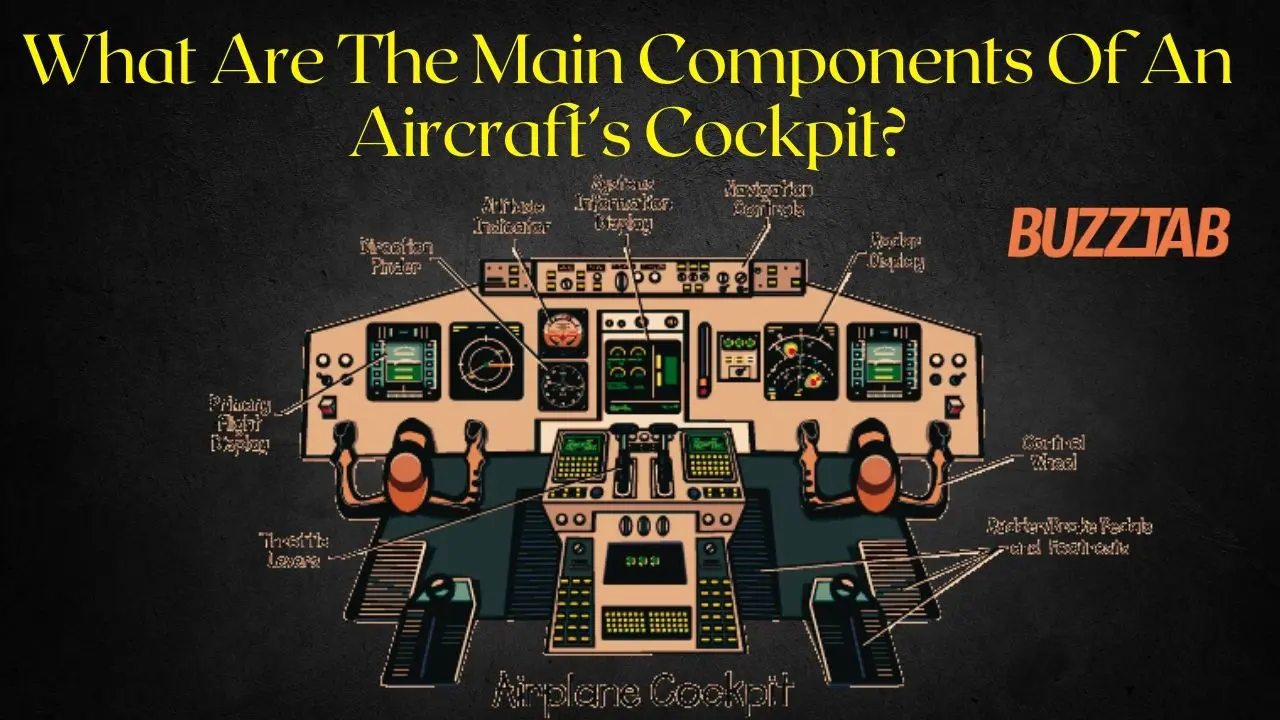

During the flight of an airplane, it could be said that the controls of the airplane are the top skill of the cockpit. That’s the area of the plane where pilots perform their duties of controlling the aircraft. Let’s discuss the major components that compose an aircraft cockpit in more detail.
Private Pilot License (PPL)
The Flightdeck PPL course is done in a very smooth way that delivers the candidate by the syllabus, practice flights, ground school, and examination in a mannered way. That contains various features like Packed with professional trainers, modern infrastructure, and excellent safety level, the highest quality of operation of aircraft courses is also done that produce professional pilots. This course is also effective for students to develop plans that can be customized and fulfill their needs and learning abilities.
Let’s go flying and help you fulfill your desire, and you will get your private pilot’s license.
Instruments and Controls
On the main part of the cockpit there is an interior surface. It is necessary to observe all the essential instruments and controls that help pilots take flight and operate the plane safely. Some of the key components contain;
Flight Instruments: This is the basic instrument, which contains air speed, altitude, heading, and vertical speed.
Navigation Instruments: the GPS, the radio, and the chart designate the pilot’s position in space and assist the pilot to move in the right direction.
Control Yokes or Joysticks: These instruments are applied to assist the control of the aircraft’s yaw, pitch, and roll.
Throttle Quadrants: Throttles are used to manage the power of the engine, and quadrants guide the pilots in making adjustments to the throttles.
Pedals: Rudder pedals are commonly used to guide the aircraft or to control the yaw of the aircraft.
Communication and Navigation Systems
Aids in communication and navigation are important in aviation since it is a sensitive field.
Cockpits are equipped with:
Radios: The radio is used by pilots in the cockpit that communicate with the air traffic control by other pilots.
Transponders: These devices are useful in the detection of aircraft on radar and serve to prevent collisions.
Navigation Systems: These are GPS, VOR, which stands for VHF omnidirectional range equipment, and ILS, which stands for instrument used in landing system equipment.
Weather Radar: To control and prevent weather conditions that can be dangerous.
Displays and Avionics
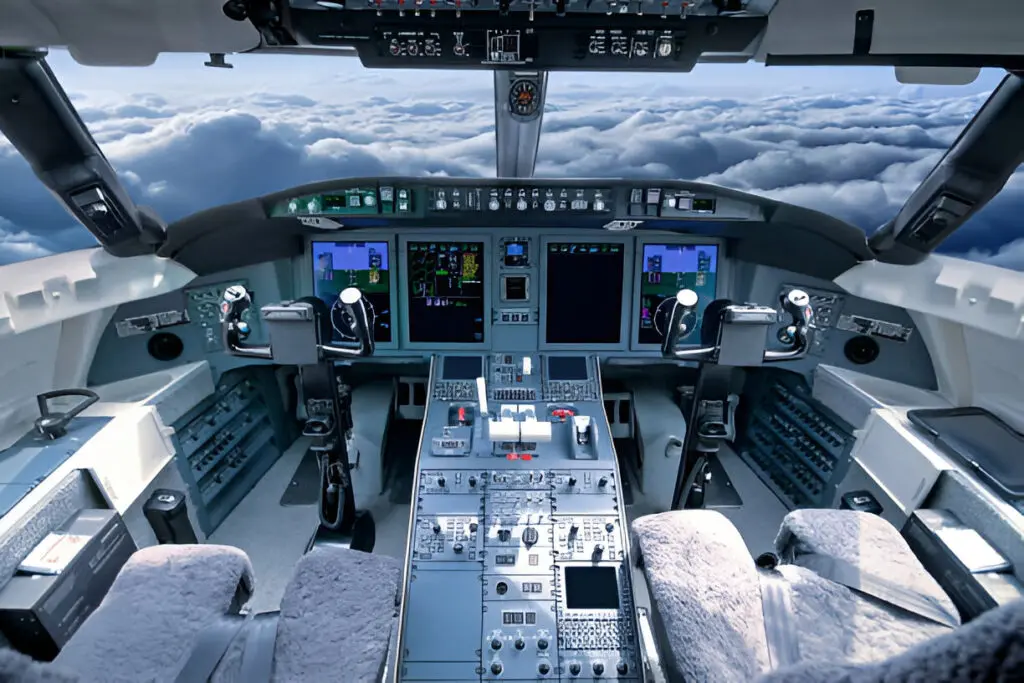
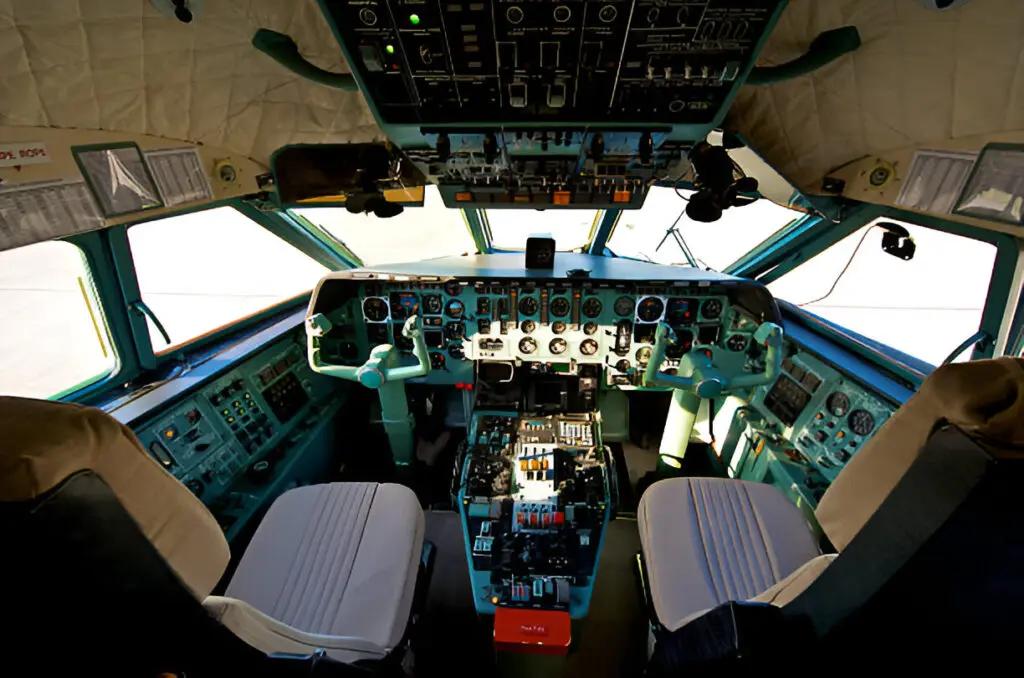
Modern cockpits are fully equipped and furnished with advanced displays and avionics.
Primary Flight Display (PFD): It conveys important flight details information reasonably, and that can be easy to understand.
Multi-Function Display (MFD): Provides extra information and different methods to move to other sections of the site.
Electronic Flight Instrument System (EFIS): Combines and collects all the records of airplane flights on a single electronic board.
Autopilot Systems: It helps pilots in supporting the stability of a flight session.
Emergency Systems
Passengers safety is uppermost in craft operating systems, and cockpit characters can change the emergency systems.
Emergency Oxygen: In case of compartment pressurization, these two checklists are as follows:
1. Fire Extinguishers: It relates to the onboard fire.
2. Emergency Locator Transmitter (ELT): it guides in detecting the aircraft in case of any crash or landing by the rescue departments.
Miscellaneous Components;
Other essential components include:
1.Circuit Breakers: dealing with the management of electrical systems.
2.Cabin Pressure Control: Also ensures optimal condition of the cabin within the flight.
Flight Data Recorder (Black Box): This can be investigative and keeps records about the collection for flight.
Read More: Finn William Leeves Coben
How does the instrument panel assist pilots?
The next top innovation in the cockpit that is designed in the aviation world is the instrument panel, which provides important information about the flight, like the altitude and status of the wheels landing gears. This control avionics panel is specific for aircraft.
Deciphering the Flight Deck: Variations that occur in different aircraft types directly leave their impact on the type of lift designed by aircraft type.
Concerning the flight deck,
Each flight deck contains the former cockpit displays, whose main purpose is to supply the pilot with some basic information that helps them in maneuvering the aircraft.
Interpreting the Gauges and Indicators for Safe Flight
Gauges and indicators are simply important for the airplane. Information like altitude, airspeed, and fuel state of the aircraft are also navigated on the avionics display and help the pilot to make a safe flight for the flight planning system.
The Functions of an Electronic Flight Instrument System
The Electronic Flight Instrument System is also known as the EFIS, which helps in flight control and also in the art of technological advancement. In new generation jets and airliners, the concept of the glass cockpit with the help of EFIS such as PFD and ND makes flying safer and more efficient.
Flight Management and Air Traffic Control:
FMS and ATC are useful in the management of flights. Pilots use these systems to operate through congested airspace, to assess and report weather conditions, and also to communicate with other ground control managers appropriately.